

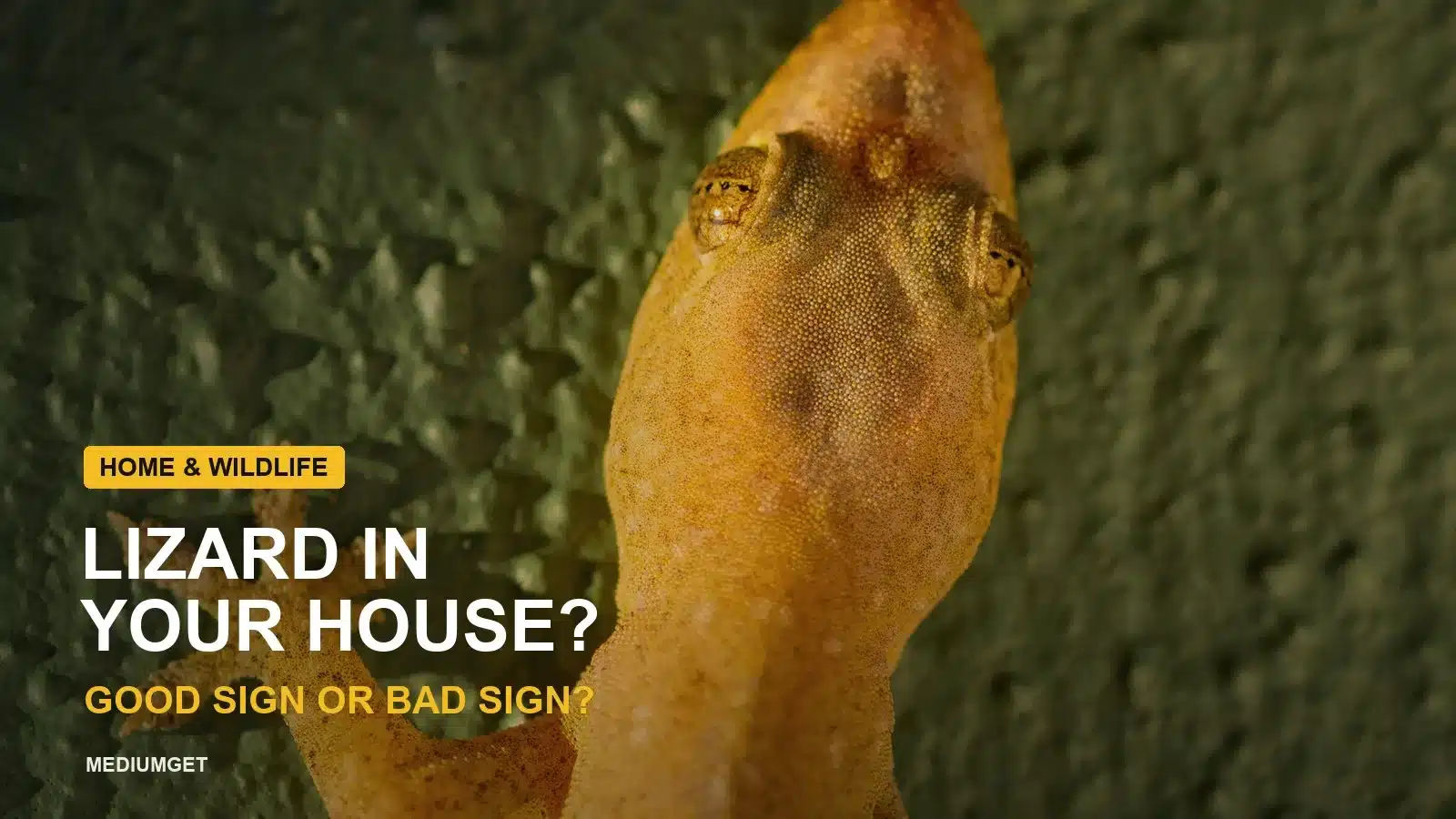
Quick answer: A lizard in your house is not a scientific sign of good or bad luck. It usually means the animal found insects, warmth, water, shelter, or a small opening that led indoors. In many homes, the visitor is a house gecko. It is usually harmless, but you should avoid touching it with bare hands and clean any surface it may have contaminated.
Seeing a lizard run across a wall can feel surprising, especially when family stories connect the animal with luck, warnings, astrology, or spiritual messages. Those meanings belong to folklore and personal belief. Biology offers a more practical explanation: your home may give the lizard food and a safe place to hide.
What does finding a lizard in your house mean?
In practical terms, finding a lizard in your house usually points to one or more of these conditions:
- Insects are available for it to eat.
- Outdoor or indoor lights are drawing insects close to windows and doors.
- A gap around a door, window, vent, pipe, roof, or wall allowed it inside.
- The room offers warmth, shade, moisture, or a quiet hiding place.
- Weather changes pushed the animal to seek temporary shelter.
The common house gecko is often seen around buildings and lights after dark. The University of Michigan’s Animal Diversity Web explains that artificial lighting attracts insects, giving these geckos an easy hunting area on walls and ceilings.
One lizard does not automatically mean your house is dirty or infested. It may have entered by accident. Repeated sightings, however, are a good reason to inspect screens, door seals, cracks, moisture, and indoor insect activity.
Is a lizard in the house good or bad luck?
There is no scientific evidence that a lizard in the house brings good luck, causes bad luck, predicts a death, announces a visitor, or warns of a future event.
Cultural interpretations are not the same everywhere. A gecko may be welcomed as a helpful insect hunter in one household and treated as an unwelcome omen in another. Astrology and spiritual traditions may also assign meanings based on where the lizard appeared, when it was seen, or what it did. Those interpretations are matters of belief, not conclusions supported by zoology or controlled evidence.
If you are asking whether the animal itself is good or bad for the home, the answer is mixed but mostly harmless. It may eat insects, which can be useful. It can also leave droppings and introduce germs to surfaces, so it should not be encouraged in kitchens, food-storage spaces, or children’s play areas.
Why geckos and other small lizards come indoors
They are hunting insects
Small geckos eat insects and spiders. Lights near windows, balconies, and doors can gather moths, flies, mosquitoes, and other prey after sunset. A gecko may follow that food source onto an outside wall and then slip through an opening.
This is often the clearest answer to the query “finding a lizard in your house is a sign of what?” It can be a sign that insects are active nearby, not a prediction about your future.
They found an entry point
Lizards can use gaps that are easy to miss. Check worn weather stripping, loose screens, open vents, spaces around plumbing, and cracks near the roofline or foundation. A door left open at night can also be enough.
They are seeking warmth, water, or shelter
A quiet room, damp area, warm wall, or space behind furniture can offer temporary shelter. Weather matters too. Heavy rain, strong heat, or a sudden temperature change may move small animals closer to buildings.
What does a lizard in the kitchen mean?
A lizard in the kitchen usually means it found a way inside and may be following insects, water, warmth, or food-related pest activity. It does not mean that the kitchen is cursed or that a specific event is about to happen.
Treat a kitchen sighting as a hygiene issue. Keep the lizard away from counters, dishes, utensils, and stored food. After it leaves, clean any surface it crossed, especially if you see droppings. Store food in closed containers, remove crumbs, empty waste regularly, and check under the sink for leaks or pest activity.
Are house lizards dangerous?
Most small house geckos try to escape rather than confront people. They are not usually aggressive, and a bite is unlikely unless someone handles or traps the animal.
There is still a basic hygiene risk. Reptiles can carry Salmonella bacteria while appearing healthy. The U.S. Food and Drug Administration notes that reptiles can naturally carry the bacteria and pass it through contact with the animal or contaminated habitat surfaces.
For that reason:
- Do not handle a wild lizard with bare hands.
- Wash your hands with soap and water after any contact.
- Keep children and pets from chasing or touching it.
- Clean surfaces where droppings are found.
- Do not prepare food while handling the animal or removal tools.
If someone is bitten, wash the area well. Seek medical advice if the skin is broken, the wound becomes red or swollen, or the person has a higher risk of serious infection.
How to remove a lizard without harming it
Stay calm and avoid grabbing the lizard by its tail. Many species can detach their tails when frightened.
- Move children and pets out of the room.
- Close interior doors so the lizard cannot run deeper into the house.
- Open a nearby exterior door or unscreened window if this creates a safe exit.
- Reduce noise and movement, then give the animal time to leave.
- If needed, place a clear container over it and slide stiff cardboard underneath without squeezing it.
- Move it outside only if local rules allow and you can do so safely. If you cannot identify the species, contact a local wildlife professional.
Avoid glue traps. They can seriously injure lizards and other animals. Do not spray household chemicals directly on the animal.
How to stop lizards from coming back
The best approach is to remove what attracts them rather than treating the lizard itself as the main problem.
- Repair damaged screens.
- Seal gaps around doors, windows, vents, pipes, and cable openings.
- Reduce insects by cleaning crumbs, closing food containers, and fixing moisture problems.
- Move bright exterior lights away from frequently opened doors where practical.
- Clear clutter near walls and entry points.
- Check for droppings behind furniture, appliances, and cabinets.
- Ask a pest professional for help if insects or lizards keep appearing.
The U.S. Environmental Protection Agency’s integrated pest management guidance recommends monitoring and correct identification before choosing controls, with prevention as the first line of pest management.
If you like separating online claims from evidence, read our explanation of why Earth will not suddenly lose gravity.
Common myths about lizards in the house
| Claim | What the evidence supports |
|---|---|
| A lizard brings good luck | This is a cultural belief, not a scientific finding. |
| A lizard brings bad luck | There is no evidence that a house lizard causes misfortune. |
| A kitchen lizard predicts an event | A kitchen offers food, water, insects, warmth, and hiding places. |
| A gecko is always dangerous | Most house geckos avoid people, but normal reptile hygiene still matters. |
| One lizard means an infestation | A single animal may have wandered in. Repeated sightings deserve inspection. |
Frequently asked questions
Are lizards in your house good luck?
Some traditions treat lizards or geckos as lucky, but science does not classify their presence as a sign of future fortune. Indoors, they are usually looking for insects, warmth, water, or shelter.
Are lizards bad luck?
No evidence shows that seeing a lizard causes bad luck. The belief varies between cultures and families.
Are geckos in the house good or bad?
Geckos can help by eating insects, but they can also leave droppings and contaminate surfaces. They are usually harmless if left alone and removed carefully.
Why do I keep seeing lizards in my house?
Frequent sightings may point to insects, easy entry points, moisture, warm hiding areas, or outdoor lights that attract prey. Inspect those conditions before using pesticides.
What does lizard astrology say about a house sighting?
Astrological and spiritual interpretations vary by tradition. They are belief systems, not scientific methods for explaining animal behavior or predicting events.
Should I kill a lizard found indoors?
Usually, no. A small house lizard can often be guided outside without harm. Focus on sealing entry points and reducing insects so it does not return.
The bottom line
A lizard in the house is neither a proven good sign nor a bad sign. It usually found food, warmth, moisture, shelter, or an opening. Let it leave or remove it carefully, clean any affected surfaces, and inspect the home if sightings continue.
