
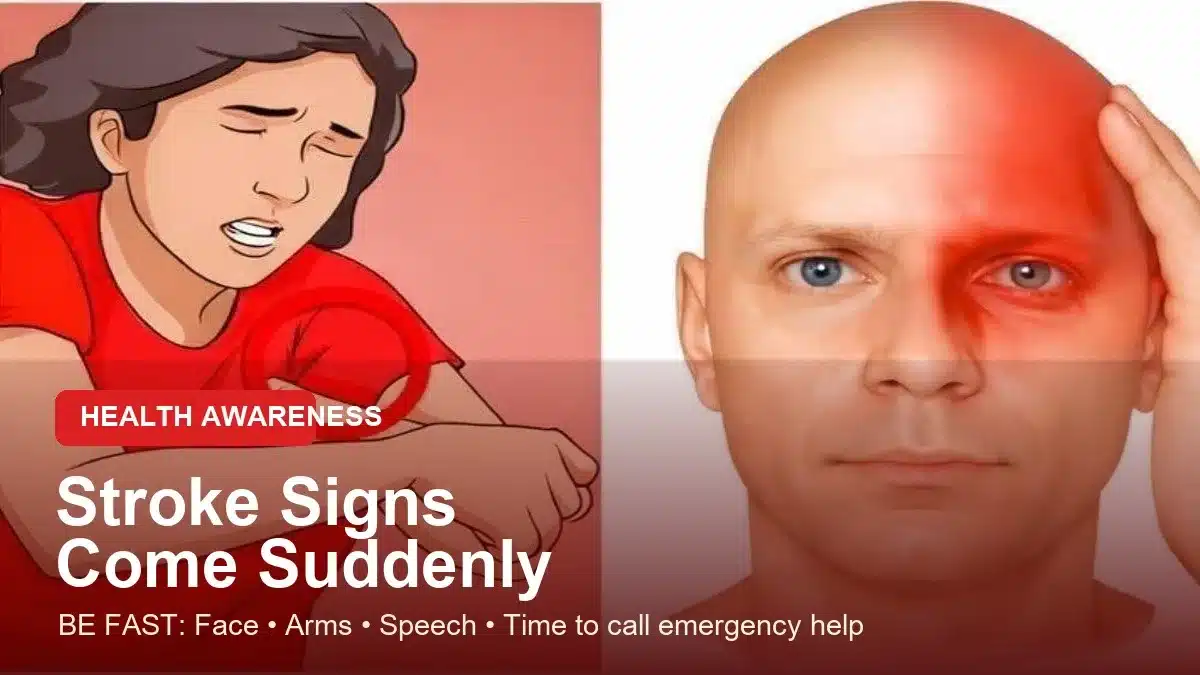
Quick answer: A stroke is a medical emergency that happens when blood flow to part of the brain is blocked or when a blood vessel in the brain ruptures. Without oxygen-rich blood, brain cells can begin to suffer damage quickly. The most important thing to remember is simple: if stroke symptoms appear suddenly, call emergency services immediately.
As you probably know, prompt treatment of a stroke patient has a huge impact on their survival. For this reason, it is important to raise public awareness of what a stroke is and what its symptoms are.
What is a stroke?
what is a stroke?
A stroke occurs when blood flow to the brain is interrupted and it is deprived of oxygen. The consequences can therefore be extremely serious, even fatal. There can be different types:
Ischemic stroke is the most common. It occurs when a blood clot or cholesterol plaque blocks an artery (this is called an embolism or thrombosis).
Hemorrhagic stroke is a less common case. It is a hemorrhage in the brain caused by a ruptured aneurysm, a tumor, an accident, a circulatory disorder, etc.
That basic explanation is the right starting point. A stroke is not a normal headache, fatigue, or “something to sleep off.” It is an emergency affecting the brain. The faster a person receives medical care, the better the chance of limiting damage and improving recovery.
Why stroke symptoms must be treated as an emergency
When the brain is deprived of blood and oxygen, time matters. Some stroke treatments only work within a limited window, and doctors need brain imaging to know whether the stroke is caused by a clot or bleeding. That is why public-health organizations urge people not to drive themselves, wait for symptoms to pass, or try home remedies.
If you think someone may be having a stroke, call emergency services right away. In the United States, that means calling 911. In the United Kingdom, the NHS advises calling 999. Use the emergency number for your country.
A useful rule is: sudden symptoms deserve urgent action. Even if the person looks better after a few minutes, they still need medical evaluation.
The FAST stroke symptoms everyone should know
The FAST test is one of the easiest ways to remember the most common stroke warning signs:
| FAST letter | What to check | What it may look like |
|---|---|---|
| **F — Face** | Ask the person to smile. | One side of the face droops or feels numb. |
| **A — Arms** | Ask the person to raise both arms. | One arm is weak, numb, or drifts downward. |
| **S — Speech** | Ask the person to repeat a simple sentence. | Speech is slurred, strange, confused, or hard to understand. |
| **T — Time** | Act immediately. | Call emergency services now. |
The American Stroke Association also uses BE FAST, which adds two more warning areas:
- **B — Balance:** sudden dizziness, trouble walking, or loss of coordination.
- **E — Eyes:** sudden blurred vision, double vision, or loss of sight in one or both eyes.
These signs do not need to appear all at once. One sudden warning sign is enough to treat the situation seriously.
Other possible signs of stroke
Stroke can look different from person to person. In addition to FAST symptoms, warning signs may include:
- sudden numbness or weakness, especially on one side of the body;
- sudden confusion or trouble understanding speech;
- sudden trouble seeing in one or both eyes;
- sudden trouble walking, dizziness, or loss of balance;
- sudden severe headache with no known cause;
- nausea or vomiting with other neurological symptoms.
Do not spend time trying to diagnose the exact type of stroke at home. The job of a witness, friend, or family member is to recognize the warning signs and get emergency help.
Ischemic stroke vs hemorrhagic stroke
There are two major stroke categories: ischemic and hemorrhagic. Both can be dangerous, but they happen in different ways.
| Type of stroke | What happens | Common explanation |
|---|---|---|
| **Ischemic stroke** | A clot or blockage stops blood flow to part of the brain. | This is the most common type of stroke. The blockage may involve a clot, plaque buildup, thrombosis, or an embolism. |
| **Hemorrhagic stroke** | A blood vessel in or around the brain ruptures and causes bleeding. | This may be linked to a ruptured aneurysm, blood vessel problem, injury, or other medical condition. |
Because treatment differs, emergency teams and hospitals use scans and tests to identify what is happening. A medication that may help in one situation may be dangerous in another, which is another reason not to self-treat.
What is a mini-stroke or TIA?
A transient ischemic attack, often called a TIA or “mini-stroke,” happens when stroke-like symptoms appear and then resolve. The word “mini” can make it sound harmless, but that is misleading. A TIA can be a serious warning sign that a full stroke may happen later.
If symptoms disappear, you should still get urgent medical help. The NHS and other medical sources warn that temporary symptoms should not be ignored.
Who is at higher risk of stroke?
Stroke can happen at any age, but some factors raise the risk. Common risk factors include:
- high blood pressure;
- diabetes;
- high cholesterol;
- smoking;
- atrial fibrillation or irregular heartbeat;
- previous stroke or TIA;
- certain blood vessel or heart conditions;
- heavy alcohol use;
- physical inactivity;
- family history and age.
Some risks can be reduced through regular medical care, blood pressure control, not smoking, healthy eating, physical activity, and taking prescribed medicines as directed. Prevention matters, but prevention does not replace emergency care when symptoms appear.
What to do if someone may be having a stroke
If you suspect a stroke, take these steps:
- **Call emergency services immediately.** Do not wait to see if symptoms improve.
- **Note the time symptoms started.** Doctors may ask when the person was last known to be well.
- **Keep the person safe and still.** Help them sit or lie down if needed.
- **Do not give food, drink, or medication unless emergency professionals instruct you to.** Swallowing may be affected.
- **Stay with the person.** Watch for changes in breathing, consciousness, speech, or weakness.
- **Share symptoms clearly with responders.** Mention face drooping, arm weakness, speech trouble, vision changes, balance problems, headache, or confusion.
The goal is not to be perfect. The goal is to act fast.
A careful note about “warning signs a month before a stroke”
Many viral posts claim that the body gives clear stroke warnings days or weeks in advance. That message can be dangerous if it makes people focus on vague symptoms instead of sudden emergency signs.
Some people may have risk factors or a TIA before a stroke, but the safest public-health message is still this: stroke symptoms usually need immediate medical attention when they appear. If there is face drooping, arm weakness, speech trouble, sudden vision loss, balance problems, confusion, or a severe unexplained headache, do not wait.
FAQ about stroke
What is a stroke in simple words?
A stroke happens when blood flow to part of the brain is blocked or when a blood vessel in the brain bursts. The brain then loses oxygen-rich blood, which can cause serious damage.
What are the first signs of a stroke?
The main warning signs are face drooping, arm weakness, speech difficulty, sudden balance problems, sudden vision changes, confusion, numbness, or a severe unexplained headache.
What does FAST mean for stroke?
FAST means Face, Arms, Speech, and Time. Check for face drooping, arm weakness, and speech trouble. If any sign is present, it is time to call emergency services.
Can stroke symptoms go away?
Yes. Symptoms can sometimes stop after a short time, especially with a TIA or “mini-stroke.” Even if symptoms go away, urgent medical care is still needed.
Is an ischemic stroke different from a hemorrhagic stroke?
Yes. An ischemic stroke is caused by a blockage, often a clot. A hemorrhagic stroke is caused by bleeding from a ruptured blood vessel in or around the brain.
Should you drive someone to the hospital during a stroke?
Calling emergency services is usually safer than driving. Emergency responders can begin assessment, alert the hospital, and manage complications on the way.
Final takeaway
A stroke is a brain emergency. Knowing what a stroke is and recognizing stroke symptoms can help save a life. Remember FAST or BE FAST, take sudden warning signs seriously, and call emergency services immediately.
Medical note: This article is for public awareness and does not replace professional medical advice, diagnosis, or treatment.
