

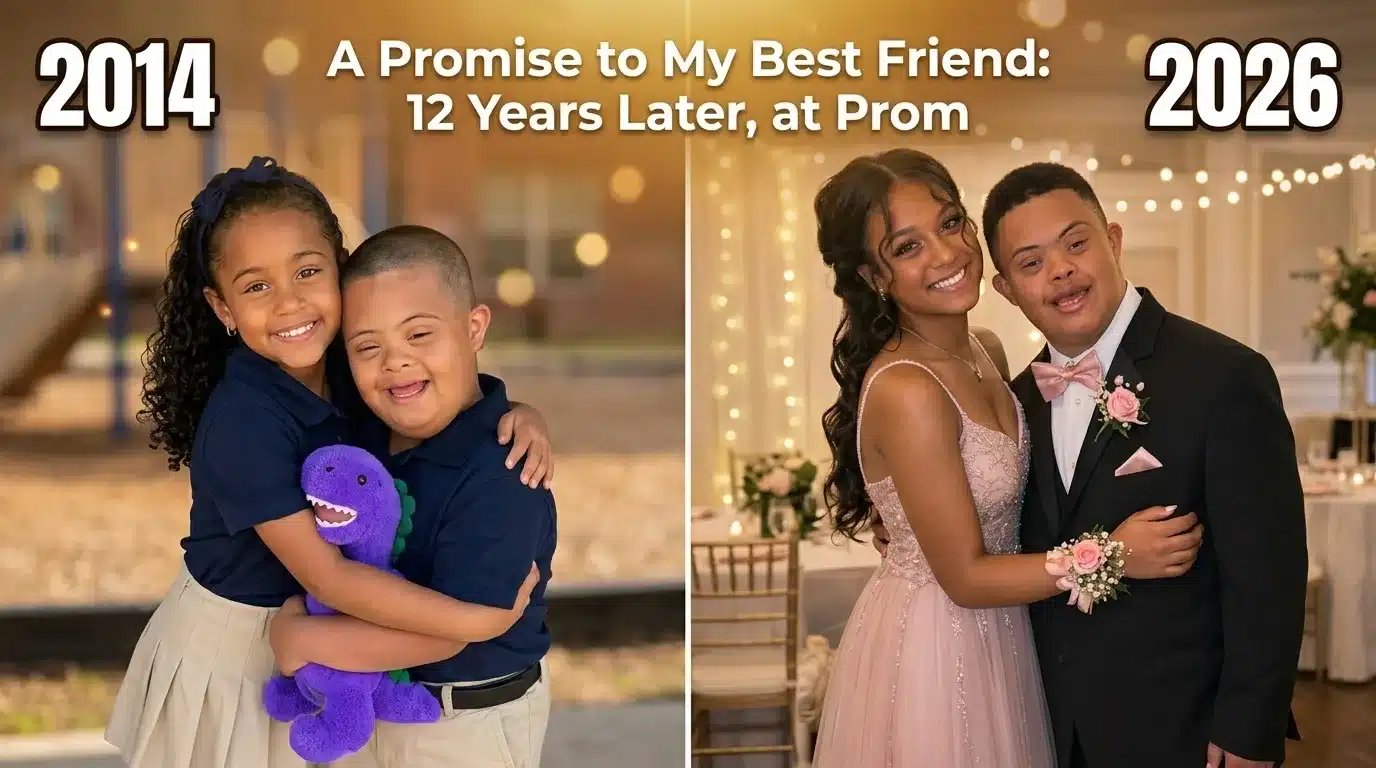
Best Friends Prom: A Childhood Promise Kept 12 Years Later
True friendship doesn’t care about social status, popular tables, or the simple passage of time. Back when we were just six years old, sitting on the dusty edge of the elementary school playground with scraped knees and oversized backpacks, I made a pinky promise to my best friend with Down syndrome: “No matter what happens when we grow up, we are going to high school prom together.”
Twelve years later, that childhood promise became a reality in a beautiful best friends prom moment that neither of us would ever forget.
Fast forward twelve years, and our senior year of high school finally arrived. Prom posters covered the hallway walls, and everyone was scrambling to find dates, rent tuxedos, and make dinner reservations. I was completely ready to keep the promise we made as little kids. However, when I brought up our big plans over dinner, my mother paused, looked at me with deep seriousness, and declared that I could only go with him on one unexpected condition.
Here is the full story of a childhood promise, a mother’s surprising rule, and a prom night that taught our entire community an unforgettable lesson about real love, loyalty, and inclusion.
A Playground Promise Made at Six Years Old
We met on our very first day of primary school. While most kids clustered into loud groups of old preschool buddies, he was standing quietly near the coat hooks, holding a soft purple plush toy. He had Down syndrome, but to six-year-old me, that didn’t mean anything other than he had the brightest smile and the warmest heart in the classroom.
From that day on, we were practically inseparable. We traded snacks during recess, shared crayons during art class, and always stood up for each other when the schoolyard got loud or overwhelming. Our bond was instant, effortless, and entirely pure.
One afternoon, after watching a movie about high school life, I turned to him on the swings and declared, “When we get big, you’re taking me to the big dance!” He grinned, nodded enthusiastically, and we locked pinky fingers to seal the deal. To us, it wasn’t just small talk—it was a solid contract between two best friends.
Growing Up Together Through the Years
As the years passed, school got harder and social dynamics became far more complex. High school can be a difficult place to navigate, especially for teenagers with special needs. Yet, through every grade, our friendship remained a constant anchor.
We cheered for each other at sports days, spent hours studying for history tests, and hung out on weekends eating pizza and playing video games. While other friendship groups shifted, split, and dissolved over teenage drama, ours only grew stronger.
When senior year finally arrived, everyone started talking about elaborate “promposals,” matching suits, and formal dresses. For me, there was never any question or hesitation about who my date would be. My best friend with Down syndrome was the only person I ever envisioned sharing that milestone with.
Our best friends prom moment had been planned since childhood, long before either of us knew how important that night would eventually become.
The Mother’s Condition That Changed Everything
When I told my mother that we were finalizing our prom outfit colors and picking out corsages, her reaction surprised me. Instead of immediately smiling or taking out her camera, she asked me to sit down at the kitchen table for a quiet talk.
“I love your loyalty,” she began carefully, keeping her tone grounded. “And you can absolutely go to prom together—but only on one single condition.”
My mind raced. Was she worried about what other teenagers might say? Was she concerned about social pressure or traditional high school expectations?
What she said next took me completely off guard:
“You cannot treat this date as an act of charity, and you cannot post about it online looking for applause or viral views. You are going as genuine, equal best friends who care about each other deeply. If you take him, you make sure he feels like the absolute king of the dance floor—not a good deed for your social media.”
Her condition hit me right in the heart. My mother wanted to protect his dignity above everything else. She understood that true inclusion isn’t about making yourself look like a good person; it’s about treating someone with the deep respect they deserve as an equal human being.
Prom Night: Twelve Years in the Making
When the big evening finally arrived, the excitement was tangible. He arrived at my front door wearing a sharp black tuxedo, a pink bow tie, and holding a corsage box with proud, slightly nervous hands. Seeing him standing there—looking like a handsome young gentleman instead of the little boy holding a purple plushie—brought tears to everyone’s eyes.
When we walked into the decorated gymnasium, there were no awkward stares or patronizing applause. There were just two lifelong friends tearing up the dance floor to our favorite tunes. He led the dance moves, laughed with our classmates, and posed for endless photos.
Looking back at our 2014 playground photo next to our 2026 prom picture, the change in our height and style is obvious. But the look in our eyes—the genuine joy of being together—remains completely unchanged.
That best friends prom memory became more than just a photograph. It represented 12 years of friendship, a childhood promise, and the special bond between two people who grew up together.
Why Inclusive Friendships Matter for Everyone
Stories of inclusion are often framed as heartwarming exceptions, but genuine friendships between neurotypical individuals and people with developmental differences should simply be the standard.
Here is why keeping inclusion at the heart of youth culture matters so much:
- Breaking Down Stigmas: Early childhood friendships normalize differences and eliminate fear or awkwardness surrounding conditions like Down syndrome.
- Building Genuine Empathy: Learning to value people for who they are—rather than what they can achieve socially—builds lifelong character and maturity.
- Creating Lasting Memories: Fulfilling a promise made at six years old creates a core memory that proves integrity and kindness always win in the end.
Going to prom with my best friend wasn’t a favor; it was the highlight of my high school years.
Frequently Asked Questions
How can high schools create a more inclusive environment for students with special needs?
High schools can foster genuine inclusion by setting up peer-mentorship programs, organizing inclusive events, integrated sports activities, and ensuring every student has equal access to major milestones like homecoming and senior prom.
What is Down syndrome and how does it affect youth?
Down syndrome is a genetic condition caused by the presence of an extra chromosome 21. While it presents certain developmental and physical challenges, individuals with Down syndrome lead fulfilling lives, form deep personal relationships, and contribute meaningfully to their schools and communities.
Why are childhood promises so powerful?
Promises made in early childhood are untainted by social status, peer pressure, or adult cynicism. Honoring those promises as young adults demonstrates real integrity, emotional maturity, and deep loyalty.
What makes a best friends prom story so meaningful?
A best friends prom story can be meaningful because it celebrates friendship, loyalty, inclusion, and the fulfillment of a promise made years earlier. For two childhood friends, attending prom together can become a lasting memory that connects their childhood and teenage years.
