

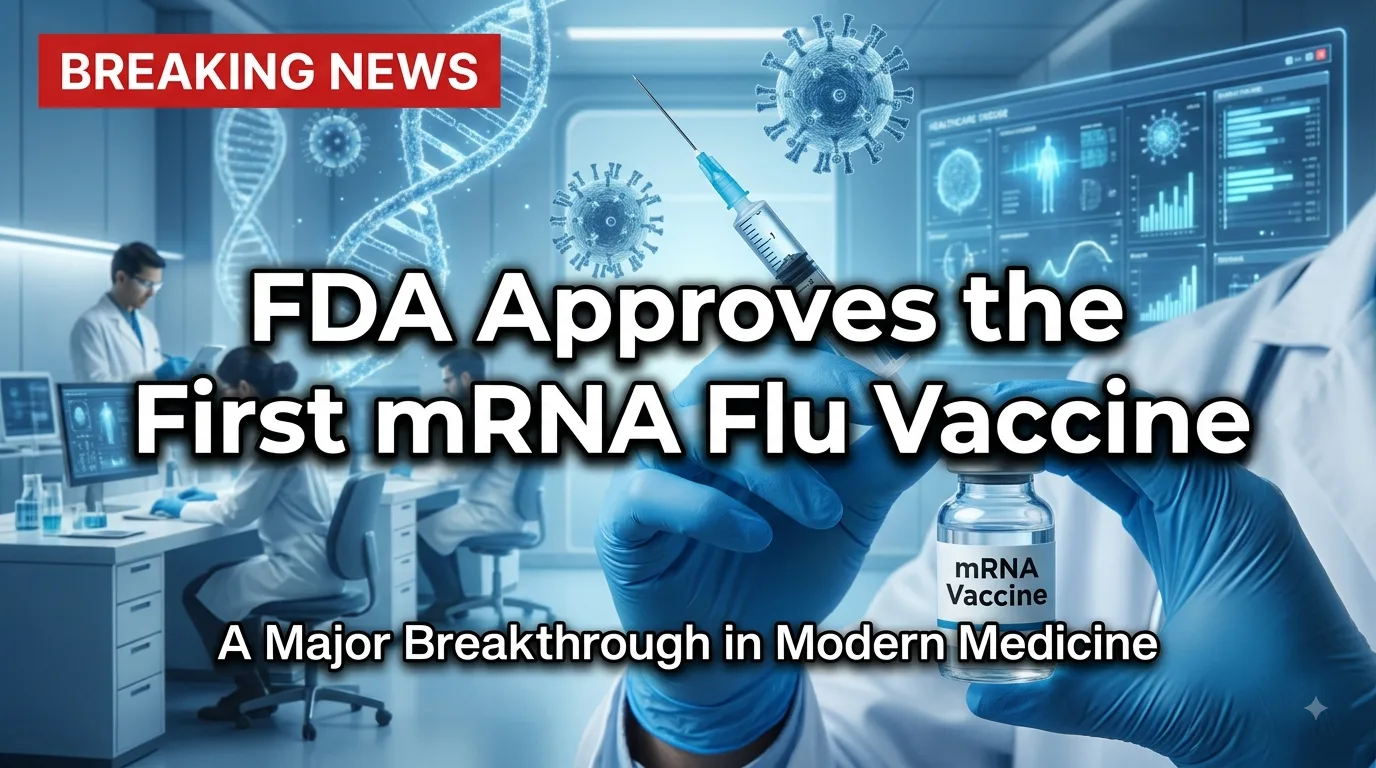
FDA Approves the First mRNA Flu Vaccine, Marking a Major Medical Breakthrough
In a landmark decision for global healthcare, the U.S. Food and Drug Administration (FDA) has approved the world’s first mRNA-based influenza vaccine, developed by biotechnology company Moderna. The approval represents a major advancement in vaccine science and could transform how seasonal flu vaccines are developed and distributed in the future.
Messenger RNA (mRNA) technology gained worldwide attention during the COVID-19 pandemic, when it was successfully used to create highly effective vaccines in record time. Unlike traditional flu vaccines, which are produced by growing viruses in eggs or cell cultures, mRNA vaccines use a small genetic instruction that teaches the body’s cells to produce a harmless viral protein. This process allows the immune system to recognize and respond quickly if it later encounters the real influenza virus.
Health experts believe this new approach offers several important advantages. One of the biggest benefits is speed. Because mRNA vaccines can be designed and manufactured much faster than conventional vaccines, scientists may be able to respond more effectively when new influenza strains emerge. This could improve the accuracy of seasonal flu vaccines and provide stronger protection during severe flu seasons.
Seasonal influenza remains one of the world’s most common infectious diseases, affecting millions of people every year. According to public health authorities, annual flu outbreaks lead to hundreds of thousands of hospitalizations and many deaths worldwide, particularly among older adults, young children, pregnant women, and individuals with weakened immune systems. Improving vaccine technology has therefore remained a top priority for researchers and governments.
During large clinical trials, Moderna’s new vaccine demonstrated a strong immune response and met the safety and effectiveness standards required by U.S. regulators. Researchers say the approval also confirms the growing role of mRNA technology beyond COVID-19, opening the door for future vaccines targeting a wide range of infectious diseases.
Scientists are already studying the use of mRNA technology for vaccines against respiratory syncytial virus (RSV), HIV, and even certain forms of cancer. Many experts believe this flexible platform could become one of the most important tools in modern medicine over the coming decade.
Why This Matters
The approval of the first mRNA influenza vaccine is more than just a new flu shot—it marks another important milestone in the evolution of vaccine science. Faster development, improved adaptability to changing virus strains, and the potential for broader disease prevention could reshape global public health in the years ahead.
The FDA’s approval of Moderna’s first mRNA flu vaccine represents a significant breakthrough for medical innovation. As researchers continue to expand the use of mRNA technology, this achievement could pave the way for a new generation of vaccines that are faster to produce, more adaptable, and better equipped to protect millions of people around the world from infectious diseases.
