

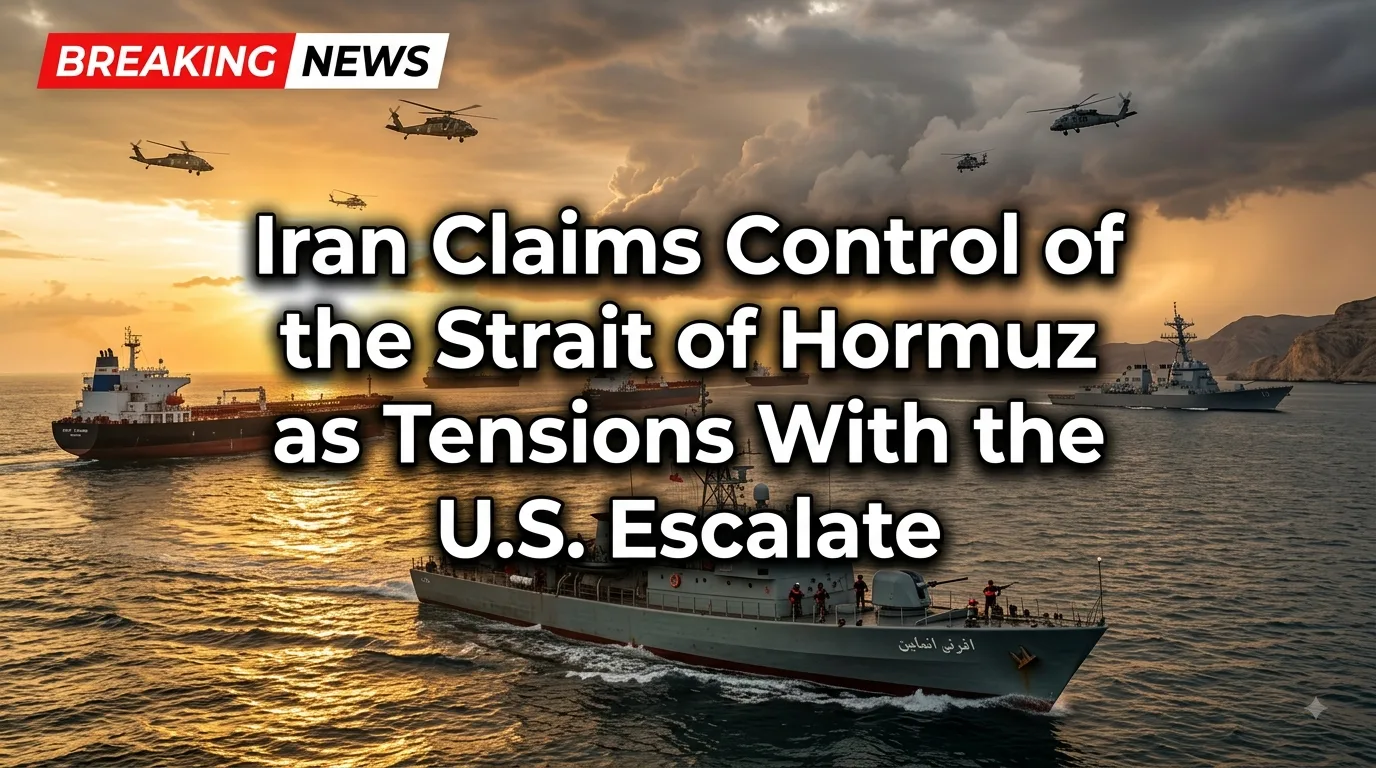
Iran Claims Control of the Strait of Hormuz as Tensions With the U.S. Escalate
Tensions in the Middle East have intensified after Iran declared that the Strait of Hormuz remains under its control, responding to recent statements from U.S. President Donald Trump regarding the strategic waterway. The exchange of claims has drawn international attention, as the Strait of Hormuz is considered one of the world’s most critical maritime routes for global energy supplies.
The Strait of Hormuz connects the Persian Gulf to the Gulf of Oman and the Arabian Sea, serving as a vital corridor for international shipping. A significant share of the world’s crude oil and liquefied natural gas exports passes through this narrow passage every day. Because of its importance, any increase in military activity or political tension in the region can quickly affect global energy markets and shipping operations.
Iranian officials stated that the country’s armed forces continue to maintain security and operational control in the area. The comments came shortly after President Trump suggested that the United States had complete control over the strategic waterway, further increasing diplomatic tensions between the two countries.
Although no major military confrontation has been reported, naval forces from several countries remain active throughout the Gulf. International observers are closely monitoring the situation, warning that even a small incident in the Strait of Hormuz could have significant consequences for global trade, oil prices, and regional stability.
Energy markets are paying close attention to every development. In previous periods of heightened tension, concerns over possible disruptions to shipping routes have contributed to volatility in oil prices. Analysts believe that maintaining freedom of navigation through the Strait remains a priority for many governments because of its importance to the global economy.
Diplomatic efforts are continuing as regional and international leaders call for restraint to avoid further escalation. Security experts emphasize that dialogue remains the most effective way to reduce tensions and ensure the uninterrupted flow of commercial shipping through one of the world’s busiest maritime corridors.
Why the Strait of Hormuz Matters
The Strait of Hormuz is one of the most strategically important waterways on Earth. Every day, millions of barrels of oil pass through the channel, supplying markets across Asia, Europe, and other regions. Any disruption could affect fuel prices, international shipping costs, and economic stability worldwide.
Iran’s latest statement has added another chapter to the ongoing tensions between Tehran and Washington. While both sides continue to exchange strong political messages, the international community is watching closely for any developments that could affect regional security or the global economy. For now, commercial shipping continues through the Strait of Hormuz, but the situation remains under close international observation.
