

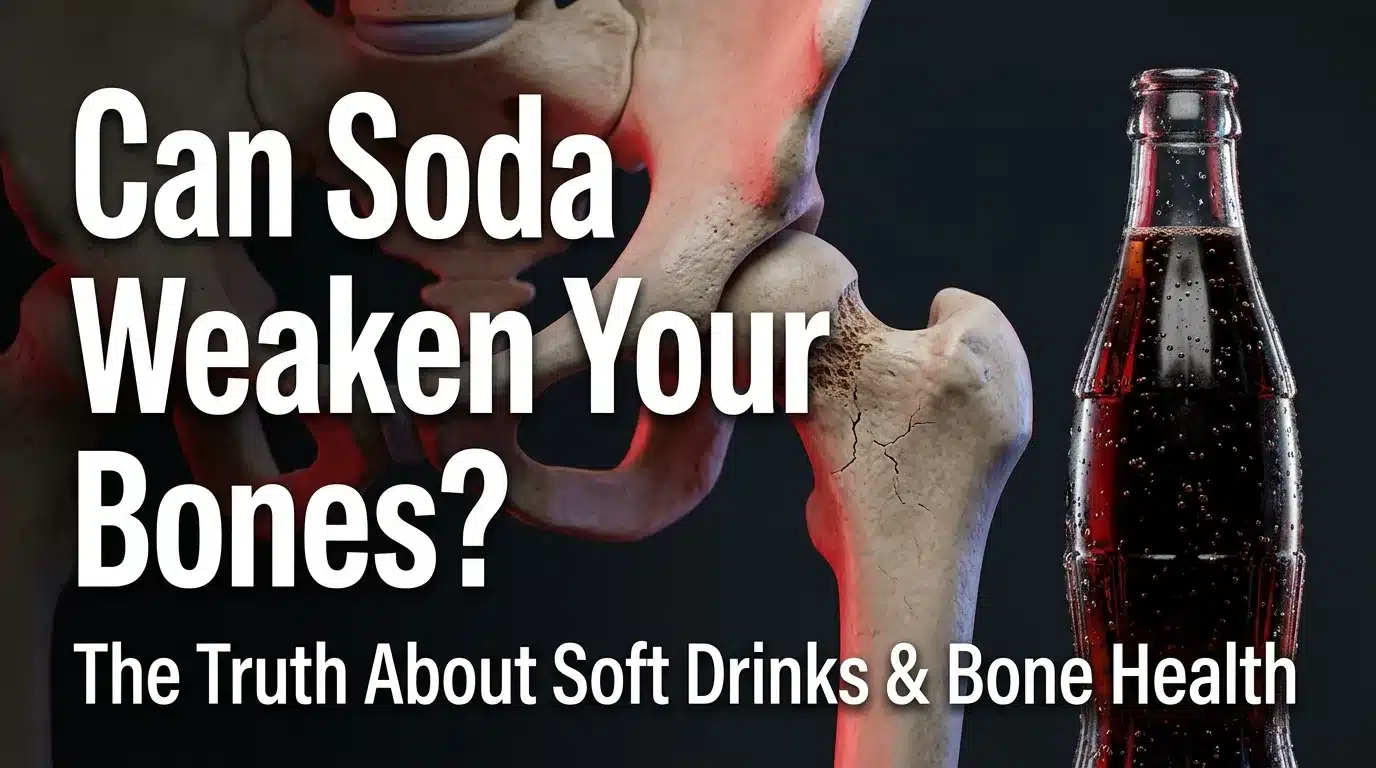
Can Soda Weaken Your Bones? The Truth About Soft Drinks and Bone Health
That cold, fizzy drink may be refreshing, but could drinking too much soda have an effect on your bones?
The internet is full of alarming claims that soda can “destroy” your bones. The reality is more nuanced. Research has found associations between frequent consumption of sugar-sweetened and carbonated beverages and certain measures of bone health, but that does not mean that drinking a soda automatically causes weak or damaged bones.
So, what is actually happening?
Why Are Soft Drinks Being Linked to Bone Health?
Several explanations have been proposed.
One important possibility is dietary displacement. Someone who regularly drinks large amounts of soda may consume fewer calcium-rich beverages or foods. Over time, replacing nutritious choices with sugary drinks could make it harder to get the nutrients needed to maintain healthy bones.
Some cola beverages also contain phosphoric acid, while many soft drinks contain caffeine. Researchers have investigated whether these ingredients may influence calcium balance and bone metabolism. However, studies have produced mixed findings, so it would be inaccurate to say that phosphoric acid alone is proven to “destroy” bones.
What Does the Research Actually Show?
A systematic review and meta-analysis covering 26 publications and more than 124,000 participants found an inverse association between sugar-sweetened beverage consumption and bone mineral density in adults. Higher consumption of carbonated beverages was also associated with lower bone mineral density in some analyses.
But there is an important distinction:
An association does not automatically prove that soda is the direct cause.
Diet, physical activity, calcium and vitamin D intake, body weight, age and other lifestyle factors can all influence bone health.
Some individual studies have also reported associations between cola consumption and lower bone mineral density, particularly in women, while other research has found no clear relationship between soda intake and osteoporosis.
Does One Soda Damage Your Bones?
No.
Having a soft drink occasionally is very different from consuming several sugary or caffeinated drinks every day.
The bigger concern is habitual, high consumption, particularly when soda regularly replaces water, milk, fortified beverages or nutrient-rich foods.
The International Osteoporosis Foundation specifically notes that there is no firm evidence that fizzy soft drinks directly weaken bones, while still recommending moderation because these drinks can displace more nutritious choices.
What Actually Helps Keep Bones Strong?
Bone health depends on much more than one food or drink.
A healthy lifestyle generally includes:
- Getting enough calcium from your diet
- Maintaining adequate vitamin D
- Eating a balanced diet with sufficient protein and other nutrients
- Staying physically active, including weight-bearing exercise
- Avoiding excessive alcohol consumption
- Not smoking
- Keeping sugary soft drinks as an occasional choice rather than a major source of daily calories
These factors matter because your bones are living tissue that continuously changes throughout your life.
The Bottom Line
The claim that “soda destroys your bones” is an oversimplification.
Research does suggest that frequent consumption of sugar-sweetened and carbonated beverages can be associated with poorer bone-health measures in some populations. But scientists are still working to understand how much of the relationship comes from the drinks themselves and how much comes from the overall dietary and lifestyle pattern.
The practical takeaway is simple:
You don’t need to panic over an occasional soda. But if soft drinks make up a large part of your daily diet, cutting back and choosing more nutritious beverages can be a sensible step for your overall health.
FAQ
Does soda cause osteoporosis?
There isn’t enough evidence to say that soda directly causes osteoporosis. Some studies have found associations between frequent soda consumption and lower bone mineral density, but other research has produced mixed results.
Does cola affect bone density?
Some observational research has linked cola consumption with lower bone mineral density, particularly in certain groups, but this does not establish that cola directly causes bone loss.
Is diet soda better for bones?
The relationship isn’t straightforward. Some observational studies have also found associations with diet soda, so simply switching from regular to diet soda shouldn’t be viewed as a complete bone-health strategy.
What is the best drink for healthy bones?
Water is an excellent everyday choice. Depending on your diet, calcium- and vitamin-D-fortified beverages can also help you meet nutrient needs.
The internet is full of alarming claims that soda can “destroy” your bones. The reality is more nuanced. Research has found associations between frequent consumption of sugar-sweetened and carbonated beverages and certain measures of bone health, but that does not mean that drinking a soda automatically causes weak or damaged bones.
So, what is actually happening?
Why Are Soft Drinks Being Linked to Bone Health?
Several explanations have been proposed.
One important possibility is dietary displacement. Someone who regularly drinks large amounts of soda may consume fewer calcium-rich beverages or foods. Over time, replacing nutritious choices with sugary drinks could make it harder to get the nutrients needed to maintain healthy bones.
Some cola beverages also contain phosphoric acid, while many soft drinks contain caffeine. Researchers have investigated whether these ingredients may influence calcium balance and bone metabolism. However, studies have produced mixed findings, so it would be inaccurate to say that phosphoric acid alone is proven to “destroy” bones.
What Does the Research Actually Show?
A systematic review and meta-analysis covering 26 publications and more than 124,000 participants found an inverse association between sugar-sweetened beverage consumption and bone mineral density in adults. Higher consumption of carbonated beverages was also associated with lower bone mineral density in some analyses.
But there is an important distinction:
An association does not automatically prove that soda is the direct cause.
Diet, physical activity, calcium and vitamin D intake, body weight, age and other lifestyle factors can all influence bone health.
Some individual studies have also reported associations between cola consumption and lower bone mineral density, particularly in women, while other research has found no clear relationship between soda intake and osteoporosis.
Does One Soda Damage Your Bones?
No.
Having a soft drink occasionally is very different from consuming several sugary or caffeinated drinks every day.
The bigger concern is habitual, high consumption, particularly when soda regularly replaces water, milk, fortified beverages or nutrient-rich foods.
The International Osteoporosis Foundation specifically notes that there is no firm evidence that fizzy soft drinks directly weaken bones, while still recommending moderation because these drinks can displace more nutritious choices.
What Actually Helps Keep Bones Strong?
Bone health depends on much more than one food or drink.
A healthy lifestyle generally includes:
- Getting enough calcium from your diet
- Maintaining adequate vitamin D
- Eating a balanced diet with sufficient protein and other nutrients
- Staying physically active, including weight-bearing exercise
- Avoiding excessive alcohol consumption
- Not smoking
- Keeping sugary soft drinks as an occasional choice rather than a major source of daily calories
These factors matter because your bones are living tissue that continuously changes throughout your life.
The Bottom Line
The claim that “soda destroys your bones” is an oversimplification.
Research does suggest that frequent consumption of sugar-sweetened and carbonated beverages can be associated with poorer bone-health measures in some populations. But scientists are still working to understand how much of the relationship comes from the drinks themselves and how much comes from the overall dietary and lifestyle pattern.
The practical takeaway is simple:
You don’t need to panic over an occasional soda. But if soft drinks make up a large part of your daily diet, cutting back and choosing more nutritious beverages can be a sensible step for your overall health.
FAQ
Does soda cause osteoporosis?
There isn’t enough evidence to say that soda directly causes osteoporosis. Some studies have found associations between frequent soda consumption and lower bone mineral density, but other research has produced mixed results.
Does cola affect bone density?
Some observational research has linked cola consumption with lower bone mineral density, particularly in certain groups, but this does not establish that cola directly causes bone loss.
Is diet soda better for bones?
The relationship isn’t straightforward. Some observational studies have also found associations with diet soda, so simply switching from regular to diet soda shouldn’t be viewed as a complete bone-health strategy.
What is the best drink for healthy bones?
Water is an excellent everyday choice. Depending on your diet, calcium- and vitamin-D-fortified beverages can also help you meet nutrient needs.
