

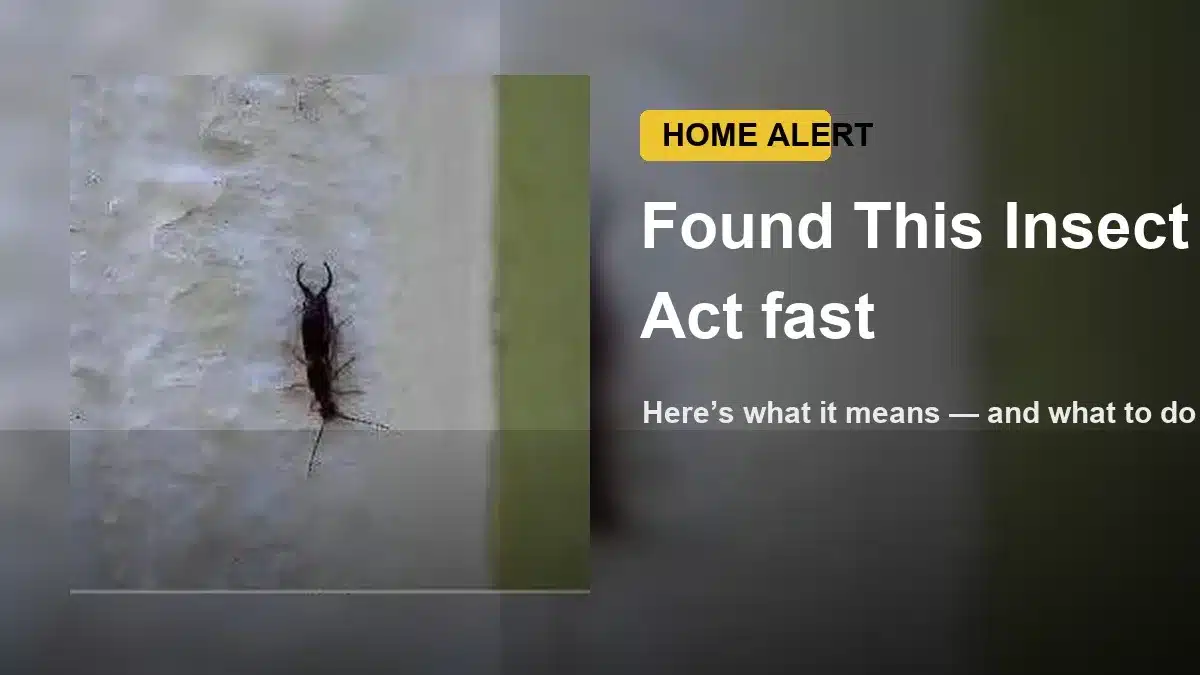
Quick answer: An earwig in house areas usually means there is moisture, darkness, or a small entry point nearby. Earwigs are not usually dangerous, but you should check for leaks, seal gaps, clean damp corners, and remove outdoor debris close to your home.
Finding a strange insect crawling on your wall can be unsettling, especially when it has small pincers at the back of its body. Many people panic when they see this bug indoors, but in most cases, it is likely an earwig — a common insect that can enter homes looking for shelter, darkness, and moisture.
The good news is that earwigs are not normally a serious threat to people. The bad news is that their presence can point to a household issue you should not ignore.
Earwig in House: The Main Warning Sign
If you find an earwig in house corners, bathrooms, kitchens, laundry rooms, basements, or near windows, the first thing to check is moisture. Earwigs prefer damp hiding places and often move indoors when outdoor conditions change.
One insect may simply have wandered inside. But repeated sightings can mean your home has the conditions earwigs like: wet areas, cracks, gaps, clutter, or organic debris close to the foundation.
What Is This Insect?
The insect in the photo appears to be an earwig. Earwigs are usually dark brown or black, with a long narrow body, thin antennae, and two curved pincers at the end of the abdomen.
Those pincers make the insect look more dangerous than it really is. Earwigs do not crawl into people’s ears as the old myth suggests, and they are not poisonous. Still, finding them indoors can be a clear sign that your home has conditions they like.
For a general pest overview, university extension resources such as the University of Minnesota Extension guide to earwigs explain that these insects are commonly linked to damp, protected hiding spots.
Why Earwigs Come Inside Homes
Earwigs prefer places that are dark, damp, and protected. Outside, they often hide under leaves, mulch, wood, stones, and garden debris. When the weather changes or outdoor areas become too wet or too dry, they may move indoors.
Inside the home, they are often found near:
- Bathrooms
- Kitchens
- Laundry rooms
- Basements
- Garages
- Window frames
- Door gaps
- Damp corners
If you see one earwig, it may simply be an insect that wandered inside. But if you keep seeing them, especially in the same area, your home may have moisture problems or small openings that need to be fixed.
What an Earwig in House Areas Could Be Warning You About
An earwig in house spaces is not just an insect problem. It can be a sign that something around the house is attracting pests.
Common causes include:
- A leaking pipe under a sink
- Poor ventilation in a bathroom
- Damp walls or flooring
- Cracks around windows or doors
- Mulch or leaves touching the house foundation
- Gaps in weather stripping
- Food crumbs or organic waste
Moisture is especially important. The U.S. Environmental Protection Agency guide to moisture and mold explains why controlling indoor dampness is important for a healthier home environment.
Are Earwigs Dangerous?
Earwigs are generally not dangerous to humans. They do not carry the same level of concern as cockroaches, bed bugs, or termites. They can use their pincers if they feel threatened, but the pinch is usually mild and does not cause serious harm.
They can, however, become annoying if they appear in large numbers. They may also damage some garden plants, seedlings, flowers, and soft fruits outside the home.
The main reason to act quickly is prevention. If you remove moisture and seal entry points early, you can stop the problem before it spreads.
How to Get Rid of an Earwig in House Corners
If you find an earwig in house corners or damp rooms, start with these simple steps:
1. Check for moisture
Look under sinks, around toilets, near windows, in laundry areas, and around basement walls. Fix leaks as soon as possible.
2. Seal entry points
Check doors, windows, wall cracks, vents, and baseboards. Even small gaps can allow insects to enter.
3. Remove outdoor hiding spots
Keep leaves, mulch, wood, and garden debris away from the outside walls of your home. Try to leave a clean space around the foundation.
4. Keep indoor areas clean and dry
Wipe wet areas, ventilate bathrooms, clean crumbs, and empty trash regularly. A dry home is less attractive to earwigs. You can also browse more practical home-care guides on Medium Get.
5. Use simple traps
Sticky traps can help you see if more earwigs are hiding nearby. Place them near damp corners, doors, or areas where you saw the insect.
When Should You Worry?
You should take the situation more seriously if earwigs appear often or in different rooms. Repeated sightings may suggest that they are finding shelter inside your home, not just entering by accident.
Call a pest control professional if:
- You see earwigs every day
- They keep coming back after cleaning
- They appear near leaks or damp walls
- You notice mold or a musty smell
- You find many insects in one area
A professional can check for hidden entry points and help identify the source of the problem.
Final Thoughts
Finding an earwig in house areas does not mean you are in danger, but it is still a warning sign. Earwigs are usually attracted to moisture, darkness, and small openings around the house.
The best response is simple: inspect your home, fix damp areas, seal cracks, and remove outdoor debris near the foundation. Acting early can keep earwigs away and help protect your home from bigger pest problems.
FAQ
Is an earwig in house areas dangerous?
No, an earwig in house areas is usually not dangerous. Earwigs may pinch if handled, but they are not poisonous and do not normally cause serious injury.
Why do I keep finding earwigs in my house?
You may have damp areas, cracks, open gaps, or outdoor debris close to your home. Earwigs are attracted to moisture and hidden spaces.
How do I get rid of earwigs naturally?
Reduce moisture, clean dark corners, seal entry points, remove leaves or mulch near the house, and use sticky traps to monitor activity.
Should I call pest control for earwigs?
If you see many earwigs or they keep returning, pest control may help. Repeated sightings can mean there is a moisture or entry-point problem.
