

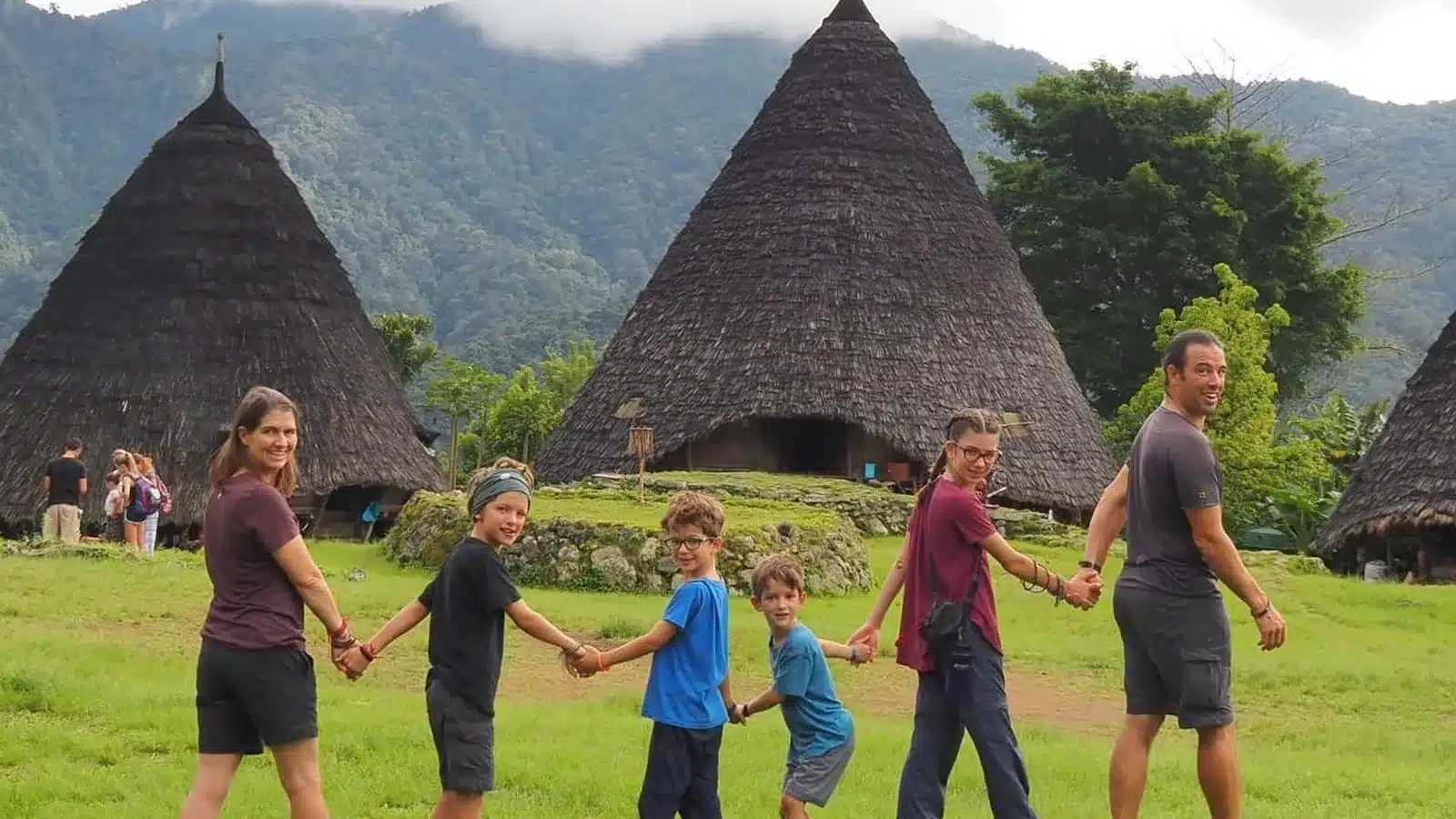
Quick answer: They were told their children might gradually lose their sight, so they decided to show them the whole world first. The Blink documentary is a National Geographic film following a Montreal family’s year-long trip after three of their four children were diagnosed with retinitis pigmentosa, a rare genetic disease that gradually takes their sight.
A family trip before the children lose their sight
When they learned that three of their children might gradually lose their sight, the parents decided to show them the whole world first.
In Montreal, Edith Lemay and Sébastien Pelletier discovered that three of their children, Mia, Colin, and Laurent, had been diagnosed with retinitis pigmentosa, a rare genetic disorder that causes gradual vision loss.
Rather than letting fear rob their children of their childhood, they decided to turn the time they had into unforgettable memories. So they left their normal lives behind and set off with the children… On their journey around the world, the family witnessed diverse landscapes, animals, and cultures, from Namibia to Tanzania to Mongolia, in an effort to create an “album of visual memories” for their children.
The trip wasn’t just a vacation; it was a way for the parents to give their children as many experiences, photos, and beautiful moments as possible before their condition worsened.
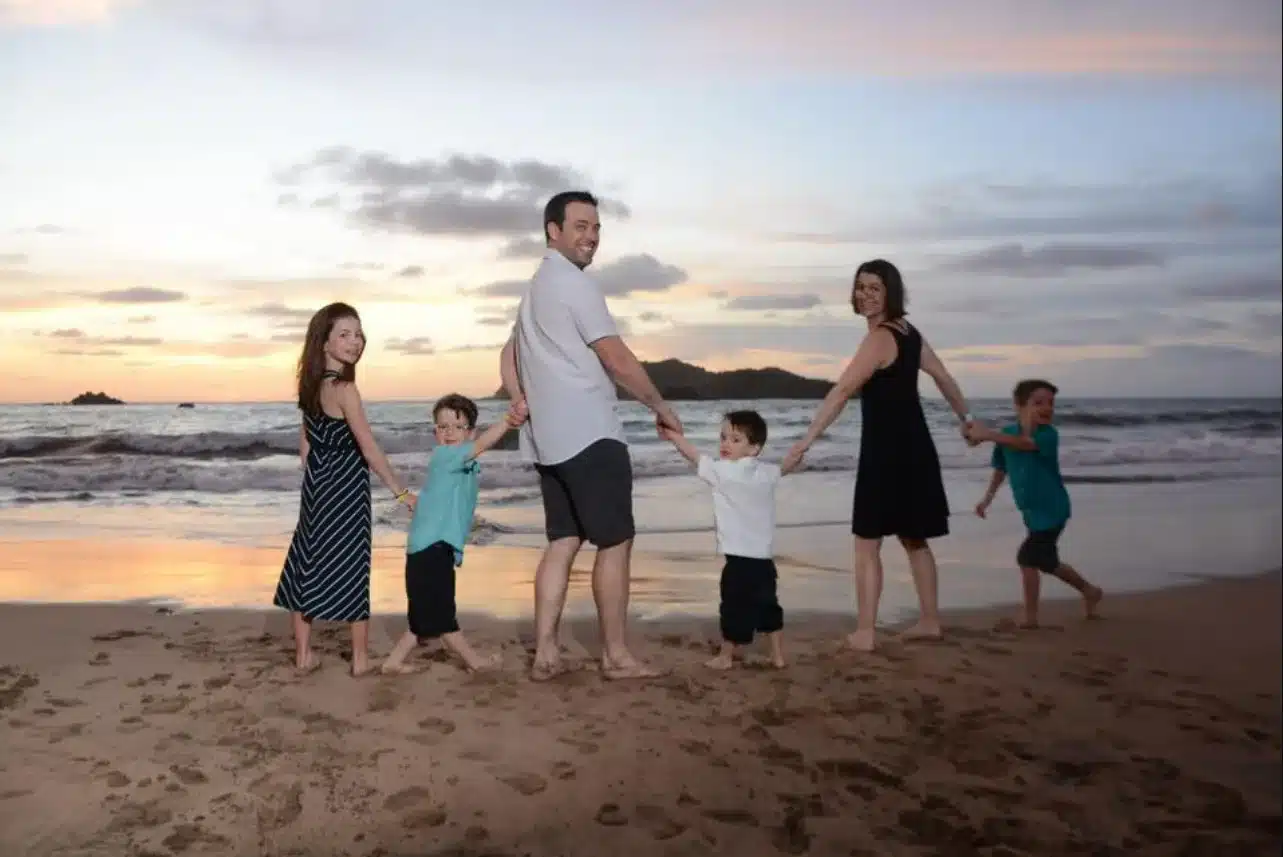
This story later became the National Geographic documentary Blink, which chronicled the family’s journey and their confrontation with an uncertain future. Sometimes, people cannot change what the future holds… but they can fill the present with memories worth preserving.
The family’s journey, and the question of what to do with a future that is slowly dimming, became the subject of the Blink documentary, which carried their story far beyond their own Instagram feed. It joins other stories on this site about families choosing compassion, including another family story about choosing compassion.
What is retinitis pigmentosa?
Retinitis pigmentosa is a group of rare eye diseases that affect the retina, the light-sensitive layer of tissue at the back of the eye. According to the National Eye Institute, the disease is genetic, people are born with it, and symptoms usually start in childhood. The cells in the retina break down slowly over time, and most people eventually lose most of their sight. There is no cure, but vision aids and rehabilitation programs can help people with RP make the most of their remaining vision.
For this family, the first warning was quiet. Their daughter Mia, then a toddler, struggled to see as the light faded, bumping into furniture and dropping toys in the evening. An ophthalmologist at Sainte-Justine Hospital in Montreal offered two explanations: a form of night blindness that might resolve on its own, or retinitis pigmentosa.
Genetic testing later confirmed that both Edith and Sébastien carry a mutation in the PDE6B gene. Because the condition follows a recessive inheritance pattern, each of their children had a one in four chance of developing it. That chance came true for Mia, Colin, and Laurent. Their brother Léa, the eldest son, is the only child without the gene.
The Independent reported that most people with the condition lose their vision by their mid-30s to 40s. That timeline is what turned a frightening diagnosis into a deadline the family chose to beat on their own terms.
An album of visual memories
The phrase that set everything in motion came from a specialist at Mia’s school. Instead of teaching Braille right away, the specialist advised her mother to fill her daughter’s mind with as many “visual memories” as she could.
“I thought, ‘I’m not going to show her an elephant in a book, I’m going to take her to see a real elephant,’ ” Edith Lemay told CNN. “And I’m going to fill her visual memory with the best, most beautiful images I can.”
The trip had been planned since early 2020, but the pandemic shut it down. When the family finally left in March 2022, both parents had quit their jobs, Edith in healthcare logistics and Sébastien in finance, and had converted a minibus into a campervan. They had no fixed itinerary and planned only about a month ahead.
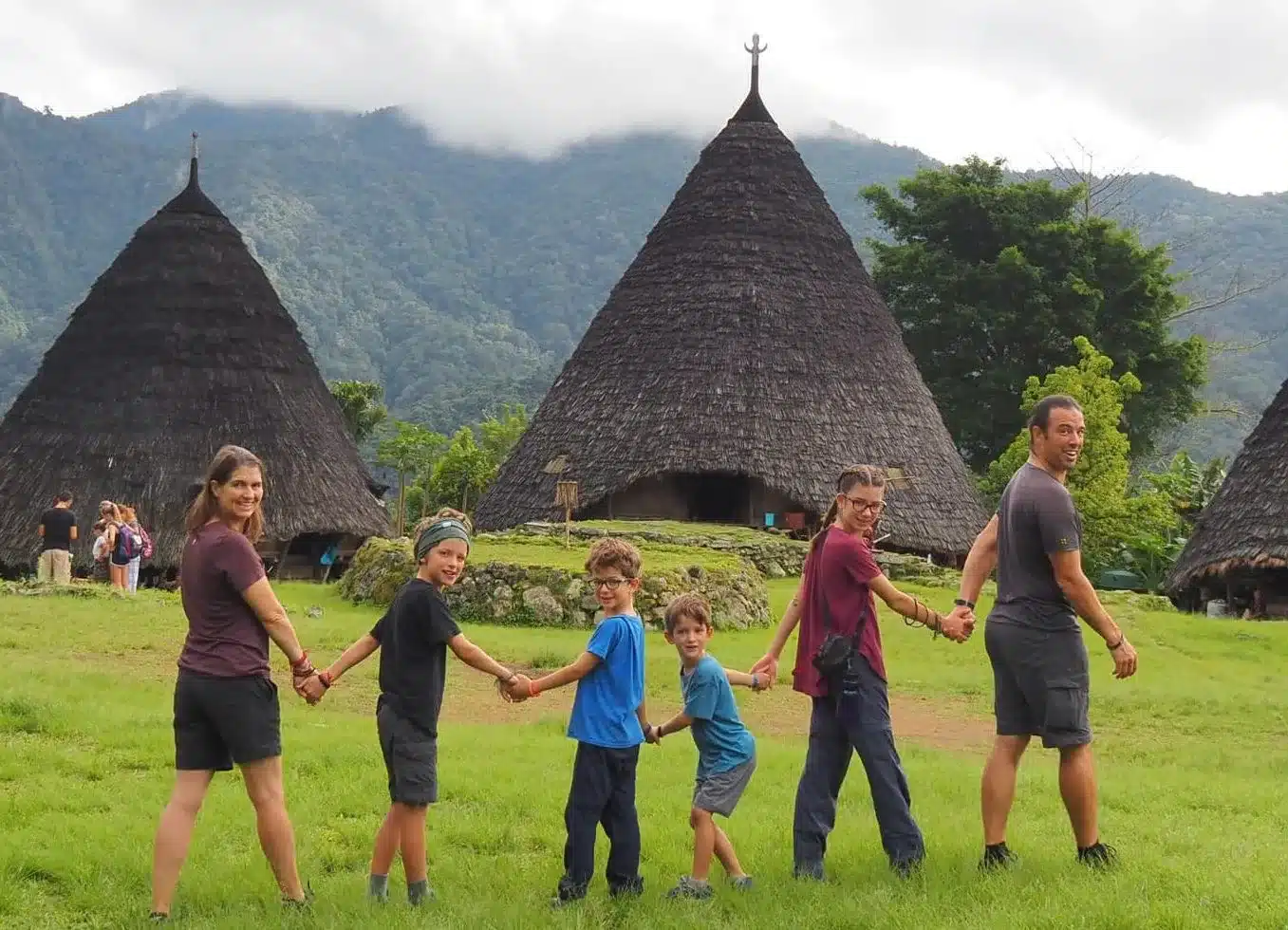
Over the next year, the family visited Namibia, Zambia, Tanzania, Turkey, Mongolia, Indonesia, Thailand, Malaysia, Nepal, Oman, and Egypt. They watched a lion feed on a Namibian safari, rode camels in Egypt, hiked the Himalayas, drove dune buggies through the Gobi desert, and packed in sunsets and hikes in Thailand. Their boys even got a surprise trip to Legoland in Malaysia. A BBC News video report followed the family mid-journey in September 2022, six months into the trip.
Then Laurent, who was five at the time, asked the question that hurt: “What does it mean to be blind?” The parents shared his question on Instagram and wrote that they would keep picking up the pieces, because “life is beautiful once you look where there is light.”
How the Blink documentary came to be
The family documented the journey on Instagram under the name Le Monde Plein Leurs Yeux, and the attention grew until a producing company approached them. Edith Lemay said the family welcomed the film partly as a souvenir for their children.
The result is the Blink documentary, a National Geographic film that opened in theatres on October 4, 2024. It follows the family of six from camel rides in Egypt to hikes in the Himalayas, and it frames the journey as hope rather than tragedy.
“We just want parents to realize that no matter how bad the situation is, there’s always something good left in this situation,” Lemay told Global News. “If you can focus on what you can do instead of what you can’t, things will be better.”
Lemay also wrote a book about the trip, Plein leurs yeux, in French.
What happened after the family came home
The year-long trip ended in April 2023, when the family landed back in Quebec. Since then, the parents have kept talking openly with their children about the disease, so that any loss of vision will arrive as something they prepared for together rather than as a shock.
Sébastien Pelletier summed up the message they wanted to leave with their children: “What we’re trying to show them is that your world is going to be different, but it’s your own to make. It’s more a message of hope than a message of despair.”
Frequently asked questions
What is the Blink documentary about?
The Blink documentary is a National Geographic film about a Montreal family that spent a year travelling the world with their four children after three of them were diagnosed with retinitis pigmentosa.
Who is the family in the Blink documentary?
Edith Lemay, Sébastien Pelletier, and their four children Mia, Léa, Colin, and Laurent from Montreal, Quebec. Three of the four children have retinitis pigmentosa.
What is retinitis pigmentosa?
It is a group of rare genetic eye diseases that damage the retina. Symptoms usually start in childhood with trouble seeing in the dark, and the field of vision narrows over time. The National Eye Institute says there is currently no cure.
Where did the Lemay-Pelletier family travel?
They visited Namibia, Zambia, Tanzania, Turkey, Mongolia, Indonesia, Thailand, Malaysia, Nepal, Oman, and Egypt during their year-long trip from March 2022 to April 2023.
When was the Blink documentary released?
According to Global News, the National Geographic film opened in theatres on October 4, 2024.
Is there a cure for retinitis pigmentosa?
No. The National Eye Institute says there is currently no cure, but vision aids and rehabilitation programs help people with RP make the most of their remaining vision.
If this story moved you, share it with someone who needs a reason to make the most of today. And if you or a child you know is facing a vision diagnosis, the National Eye Institute’s retinitis pigmentosa page is a good, reliable first step.
The family story in the first section preserves Razer’s supplied wording, with only typo-level punctuation normalization. All other details are sourced from the linked reporting.
