

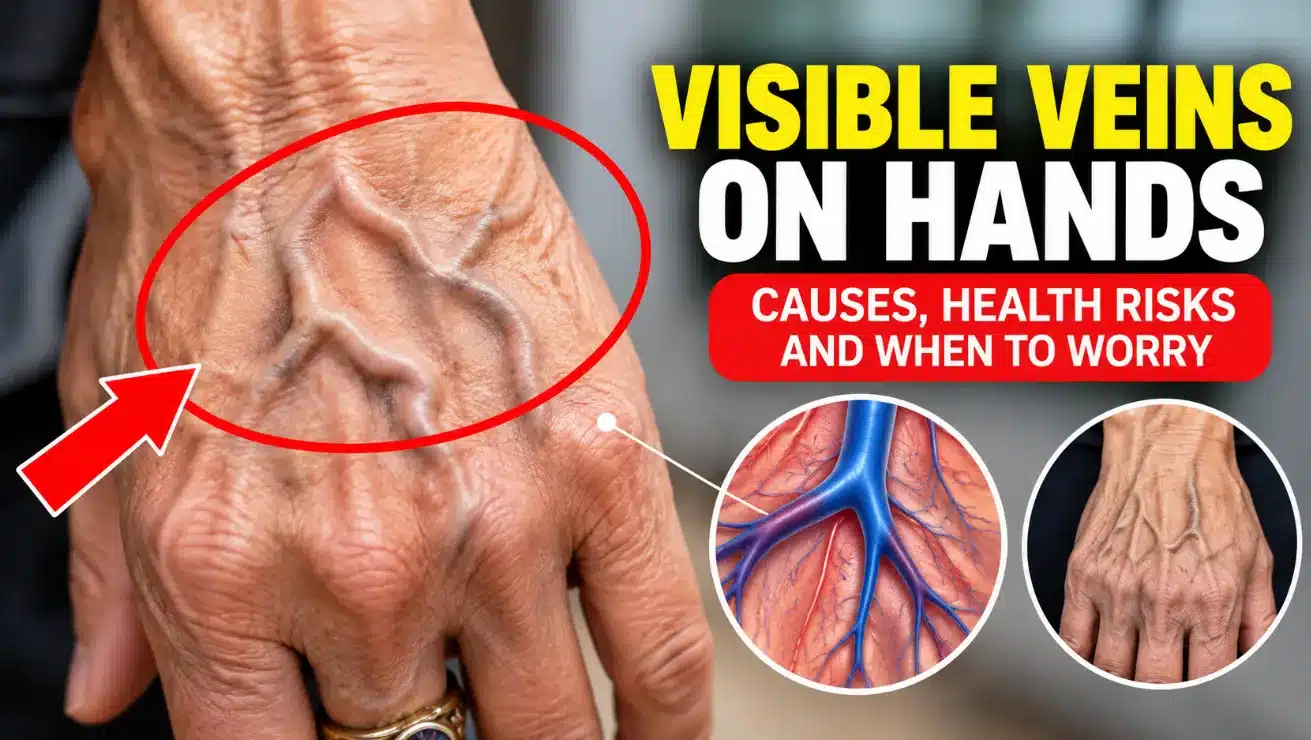
Have you ever looked down at your hands and noticed that your veins seem more visible than they used to be? Perhaps they appear blue, green, or slightly raised beneath your skin. For some people, this happens gradually over the years. For others, the change seems to appear almost overnight.
It’s natural to wonder what these changes mean.
The good news is that visible veins on hands are usually harmless. They often become more noticeable because of aging, genetics, exercise, or temperature changes. In many cases, they’re simply a normal part of how the human body works.
However, there are situations when prominent veins deserve medical attention, especially if they appear alongside pain, swelling, redness, or other unusual symptoms.
Understanding the difference between normal vein visibility and potential warning signs can help you make informed decisions about your health.
What Are Visible Veins on Hands?
Your hands contain a network of blood vessels that carry blood throughout your body. Veins are responsible for returning blood toward your heart after oxygen has been delivered to your tissues.
Some of these veins lie close to the skin’s surface. These are known as superficial veins.
Depending on your skin, genetics, and physical characteristics, superficial veins may be easy to see.
They can appear:
Blue or green beneath the skin
Slightly raised above the surrounding tissue
More noticeable across the back of the hands
Prominent after exercise or exposure to heat
More visible as the skin changes with age
The appearance of veins varies considerably from person to person.
In most situations, having visible veins does not mean there is a problem with your circulation.
According to the Cleveland Clinic, bulging veins are commonly harmless, although certain accompanying symptoms can indicate an underlying medical condition.

