

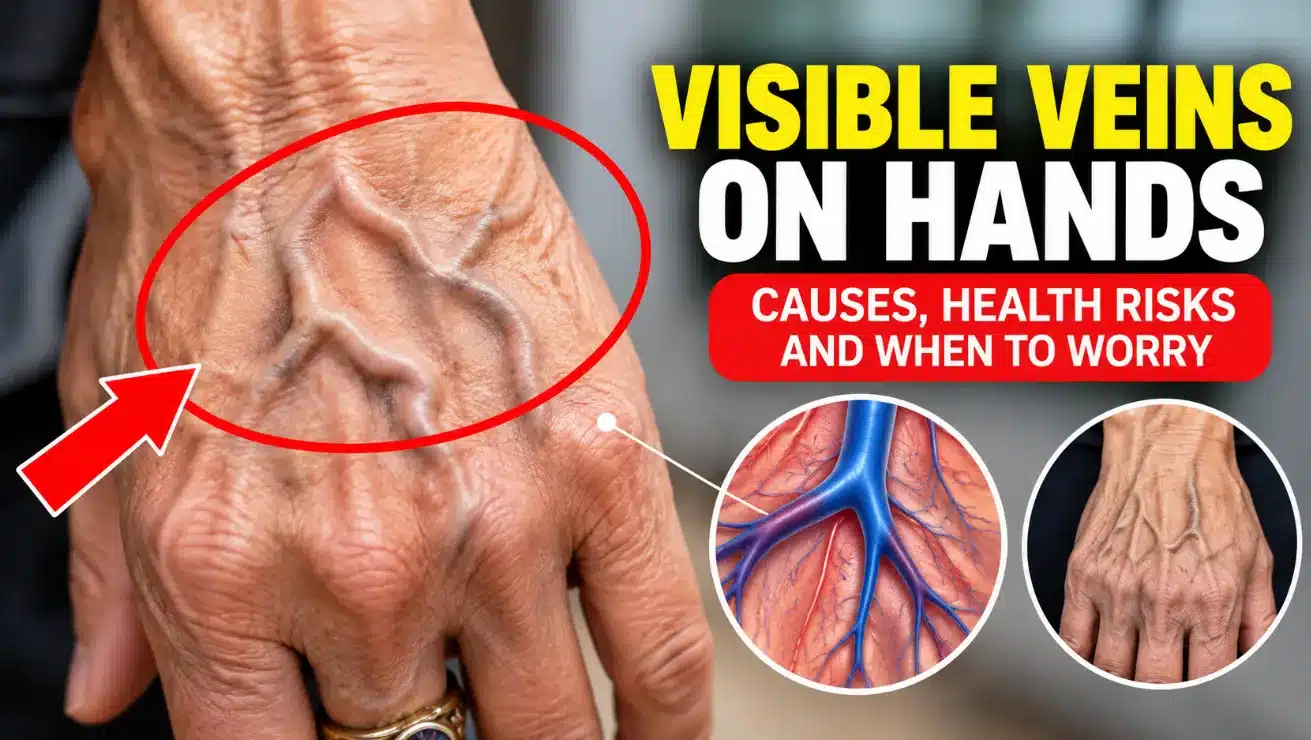
When Should You Worry About Visible Hand Veins?
Most people do not need treatment simply because their hand veins are visible.
However, certain symptoms deserve attention.
Sudden Swelling
If one hand or arm suddenly becomes swollen, especially without an obvious explanation, seek prompt medical evaluation.
Sudden swelling can sometimes indicate a problem affecting blood flow, including a blood clot.
Pain or Tenderness
Visible veins should not normally cause significant pain.
If a vein becomes painful, unusually sensitive, or tender to the touch, it may be inflamed.
A healthcare professional can assess the cause.
Redness or Unusual Skin Color
Redness, darkening, or other noticeable skin changes around a vein may indicate inflammation or another condition.
These symptoms are particularly important when accompanied by warmth, swelling, or pain.
Warmth Around a Vein
An area that feels unusually warm and tender may indicate superficial vein inflammation, sometimes called phlebitis.
The NHS recommends prompt medical assessment for symptoms such as swollen, painful, hard, or warm veins.
A Sudden Change in Appearance
If your veins have always looked similar, there is often little reason for concern.
However, a sudden and unexplained change, particularly on only one side of the body, deserves closer attention.
Emergency warning: Chest pain, sudden shortness of breath, or fainting can indicate a serious medical emergency. Seek emergency medical care immediately if these symptoms occur.
Can Visible Veins Indicate a Blood Clot?
Occasionally, changes in visible veins may be related to blood clots.
Two conditions are particularly important to understand.
Superficial Thrombophlebitis
Superficial thrombophlebitis occurs when a vein near the skin’s surface becomes inflamed, sometimes with a blood clot.
Possible symptoms include:
Pain or tenderness along a vein
Warmth around the affected area
Redness or discoloration
Localized swelling
A firm or hardened vein
Although superficial thrombophlebitis is often less serious than a deep blood clot, medical evaluation may be needed to rule out complications.
Deep Vein Thrombosis
Deep vein thrombosis, commonly called DVT, occurs when a blood clot develops in a deeper vein.
It most frequently affects the legs but can also occur in the arms.
Symptoms may include swelling, pain, warmth, and skin discoloration.
DVT requires prompt medical attention because complications can be serious.
Importantly, visible hand veins alone do not establish that a blood clot is present.
How Do Doctors Diagnose Problems With Hand Veins?
When a patient seeks medical attention for unusually prominent veins, the first step is typically a discussion of their symptoms and medical history.
A healthcare professional may ask when the veins became noticeable, whether the appearance has changed, and whether pain or swelling is present.
A physical examination can help identify inflammation, tenderness, or other abnormalities.
If a blood clot or circulation problem is suspected, the clinician may recommend a Doppler ultrasound.
This imaging test helps assess blood flow and identify potential blockages.
Additional tests may be recommended depending on the findings.
Not everyone with prominent hand veins needs medical testing.

