

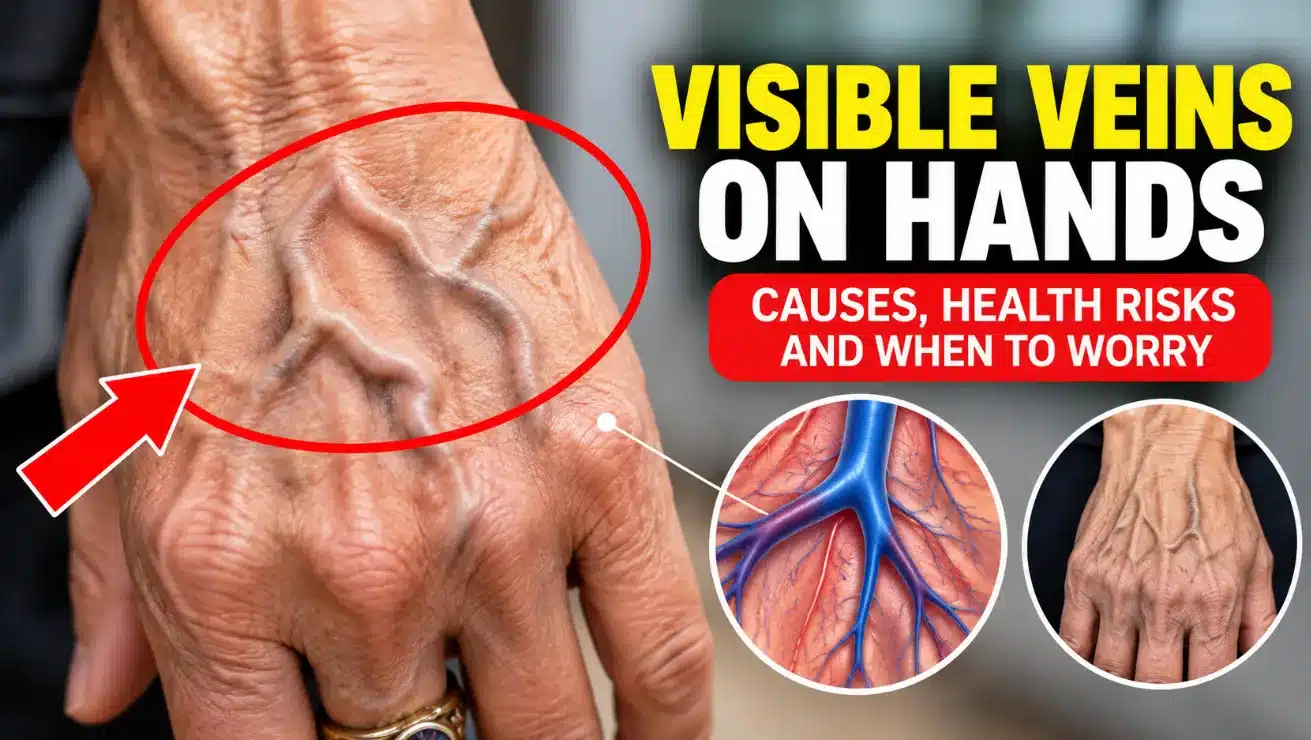
How to Support Healthy Circulation
Although you cannot control every factor affecting vein visibility, everyday habits can support general vascular health.
Regular movement helps maintain healthy blood flow.
Taking breaks from prolonged sitting can also support circulation, particularly in the legs.
Adequate sleep, balanced nutrition, hydration, and avoiding smoking contribute to overall cardiovascular well-being.
It’s also helpful to pay attention to unusual changes in your body.
A visible vein that has remained unchanged for years is different from one that suddenly becomes painful, swollen, or inflamed.
Knowing that difference can help you recognize when medical advice is appropriate.
Frequently Asked Questions About Visible Veins on Hands
1. Why are the veins on my hands suddenly more visible?
Temporary changes in temperature, exercise, or hand position can make veins more noticeable. However, a sudden unexplained change accompanied by pain or swelling should be medically evaluated.
2. Are visible veins on hands normal?
Yes. Visible hand veins are common and are usually harmless, especially when there are no additional symptoms.
3. Do hand veins become more visible with age?
Yes. Aging can make skin thinner and less elastic, allowing superficial veins to become more noticeable.
4. Can dehydration cause prominent hand veins?
Hydration status may influence circulation and appearance in some circumstances, but prominent veins alone are not a reliable sign of dehydration.
5. Are bulging hand veins dangerous?
Usually not. However, painful, swollen, warm, or unusually discolored veins may indicate a condition requiring medical attention.
6. Can exercise make hand veins more visible?
Yes. Exercise increases blood flow and can temporarily make superficial veins more prominent.
7. When should I see a doctor about visible hand veins?
Seek medical advice if the veins suddenly change, become painful or tender, or appear alongside swelling, warmth, or skin discoloration.

